After an extended absence we have arrived in Somalia.
The main headlines that one gets out of Somalia have been mostly about piracy and blackmail. Well, there are other economic activities, besides; the pirates need to invest their ransom from the ship owners.
The main supplier of electricity in this environment is Ente Nazionale Energia Elettrica popularly known as ENEE. We are saying main supplier because Mogadishu, Hargeisa and Galkayo have all been sub-divided with private companies each taking care of its sector; of course each company have its own security to avoid sabotage.
Virtually all operational plants are of the thermal type (diesel powered generator sets). Ethiopia is trying to be neighborly by helping with supply to a few towns along her border. But until there is a permanent administrative government, instead of the free for all that currently exists, we do not see any long term stability in the supply of electricity in this environment.
As dry as this land is, there are more hippos than there are cheetahs.
Tuesday, March 9, 2010
Tuesday, December 15, 2009
Electricity Kenya
We have arrived in Kenya to see what the electricity production look like, and the main player in this environment is Kenya Electricity Generating Company Limited (KenGen).
The main source of power generation in this country is Hydro (almost 60%), with the remainder coming from geothermal and thermal. That places KenGeny power among some of the greenest in the world.
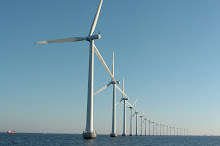
Kenya has taken on a very ambitious program to develop one of the largest wind farms in the world, and if this becomes viable, that would make Kenya the most self-sufficient country in East Africa. The windmill farm or the wind farm is targeted for completion and inauguration in 2012.
So how many Kenyans or what percentage of the population has electricity? About 20% of Kenyans have access to electricity; the exact numbers are hard to come by, whatever the case is the 20% is pretty generous estimate. Kenya seem to be trying to develop more power plants, especially in the area of geothermal.
As with all hydro power, maximum power generation is dependent on the amount of water or level of water; and Kenya is going through some sporadic rainfall, this have affected the output of electricity.
Even though less than 50% of the population is enjoying electricity after more than 45 years of self rule from Britain, the effort seem to be on the positive side, and it seems the cheetahs outnumber the hippos.
The main source of power generation in this country is Hydro (almost 60%), with the remainder coming from geothermal and thermal. That places KenGeny power among some of the greenest in the world.
Kenya has taken on a very ambitious program to develop one of the largest wind farms in the world, and if this becomes viable, that would make Kenya the most self-sufficient country in East Africa. The windmill farm or the wind farm is targeted for completion and inauguration in 2012.
So how many Kenyans or what percentage of the population has electricity? About 20% of Kenyans have access to electricity; the exact numbers are hard to come by, whatever the case is the 20% is pretty generous estimate. Kenya seem to be trying to develop more power plants, especially in the area of geothermal.
As with all hydro power, maximum power generation is dependent on the amount of water or level of water; and Kenya is going through some sporadic rainfall, this have affected the output of electricity.
Even though less than 50% of the population is enjoying electricity after more than 45 years of self rule from Britain, the effort seem to be on the positive side, and it seems the cheetahs outnumber the hippos.
Thursday, November 12, 2009
Electricity Uganda
Our search for electricity availability in Africa has taken us to Uganda. The main player in this environment is Uganda Electricity Transmission Company Limited (UETCL).
Uganda has quite a few hydro dams (which at first made me start smiling with pride). But upon further investigation, the shortfalls and deficiencies started surfacing its ugly head.
To start with, there is the Owen Falls (Nalubale) Dam near the city of Jinja; and then there is the Kiira Dam plus a few smaller ones.
The Nabulale and the Kiira together are supposed to be producing roughly 380 Megawatts of electricity, however, the amount coming from these two together amounts to ONLY 150 Megawatts (which is less than 50% capability). There is additional power being generated from thermal sources, but these have not helped the situation.
Load-shedding is ongoing. Without the load-shedding, ONLY about 10% of the total population of almost 31 million have access to electricity.
This is wishful thinking or a fools dream, but I had hoped that like her next door neighbor (Rwanda) the light would be a little brighter, but this is not the case.
There seem to be more hippos than cheetahs in this environment
Uganda has quite a few hydro dams (which at first made me start smiling with pride). But upon further investigation, the shortfalls and deficiencies started surfacing its ugly head.
To start with, there is the Owen Falls (Nalubale) Dam near the city of Jinja; and then there is the Kiira Dam plus a few smaller ones.
The Nabulale and the Kiira together are supposed to be producing roughly 380 Megawatts of electricity, however, the amount coming from these two together amounts to ONLY 150 Megawatts (which is less than 50% capability). There is additional power being generated from thermal sources, but these have not helped the situation.
Load-shedding is ongoing. Without the load-shedding, ONLY about 10% of the total population of almost 31 million have access to electricity.
This is wishful thinking or a fools dream, but I had hoped that like her next door neighbor (Rwanda) the light would be a little brighter, but this is not the case.
There seem to be more hippos than cheetahs in this environment
Wednesday, October 7, 2009
Electricity Rwanda (RECO)
Our search for electricity in Africa has taken us to Rwanda. The operator in this environment is the Rwanda Electricity Corporation (RECO).
Through July 2009, the available power being produce is about 70 MW. This amount is meeting the needs of just over 6% of the total population of the country. There is some Load shedding, and it looks like it would continue for some time to come.
There are plans to increase production, with the African Development Bank, The Belgium Government, the European Union, OPEC Fund for International Development (OFID), The Saudi Fund for Development, The Arab Bank for Economic Development, in Africa (BADEA), Japanese International Cooperation Agency (JICA) (to name a few) participating in the development projects slated for the next 3 years.
One is tempted to blast those in power for not doing enough, but we should not forget that this is the same country that had tribal genocide, and the UN soldiers, and the rest of Africa did nothing but stood and watch.
Considering where they were and the peace they have now, I can only say keep up the good work.
Hopefully on our next visit, the number would be double what it is now.
The cheetahs seem to outnumber the hippos in this environment at this time.
Through July 2009, the available power being produce is about 70 MW. This amount is meeting the needs of just over 6% of the total population of the country. There is some Load shedding, and it looks like it would continue for some time to come.
There are plans to increase production, with the African Development Bank, The Belgium Government, the European Union, OPEC Fund for International Development (OFID), The Saudi Fund for Development, The Arab Bank for Economic Development, in Africa (BADEA), Japanese International Cooperation Agency (JICA) (to name a few) participating in the development projects slated for the next 3 years.
One is tempted to blast those in power for not doing enough, but we should not forget that this is the same country that had tribal genocide, and the UN soldiers, and the rest of Africa did nothing but stood and watch.
Considering where they were and the peace they have now, I can only say keep up the good work.
Hopefully on our next visit, the number would be double what it is now.
The cheetahs seem to outnumber the hippos in this environment at this time.
Tuesday, September 15, 2009
Maker Faire Africa
Maker Faire Africa
Folks, it has been quite a while since our discussion on Electricity Burundi.
The reason is simple; I had to take August off to go to Ghana for the Inaugural conference of “Maker Faire Africa”.
For the benefit of those who have not heard about “Maker Faire”, this is an organization that brings the little inventor to the world, and hopefully gets his/her invention to the marketplace.
Since this was the first of its kind in Africa, the organizers were not sure of the turnout.
The first day of the three day event, everybody was apprehensive, not knowing the number of people who would attend.
When the doors were open at the Kofi Annan Centre for Technology in Accra, “WOW”, were we in for a SHOCK. It was standing room only, with more than 350 people in attendance.
The bottom-line is this; the conference was a fantastic success.
The next “Maker Faire Africa” conference is slated to take place in Kenya next year (2010).
So what has this got to do with Electricity in Africa? For starters, William Kamkwamba, the windmill wonder boy (now a 22 year old man) from Malawi was a participant. For those of you who have not heard of William, please go and read about him. I do not have the space to write about him here.
With all the electricity problems going on all over Africa, there was NO electricity interruption during the three days that the conference took place in Accra.
The President of Togo Faure Eyadema, even came to Ghana for two days to negotiate for future supply of electricity and water to his country from Ghana.
I am not going to say the cheetahs have overtaken the hippos in Ghana at present time, but slowly and surely the cheetah population is increasing.
Let’s give them a hand for the improvement.
Folks, it has been quite a while since our discussion on Electricity Burundi.
The reason is simple; I had to take August off to go to Ghana for the Inaugural conference of “Maker Faire Africa”.
For the benefit of those who have not heard about “Maker Faire”, this is an organization that brings the little inventor to the world, and hopefully gets his/her invention to the marketplace.
Since this was the first of its kind in Africa, the organizers were not sure of the turnout.
The first day of the three day event, everybody was apprehensive, not knowing the number of people who would attend.
When the doors were open at the Kofi Annan Centre for Technology in Accra, “WOW”, were we in for a SHOCK. It was standing room only, with more than 350 people in attendance.
The bottom-line is this; the conference was a fantastic success.
The next “Maker Faire Africa” conference is slated to take place in Kenya next year (2010).
So what has this got to do with Electricity in Africa? For starters, William Kamkwamba, the windmill wonder boy (now a 22 year old man) from Malawi was a participant. For those of you who have not heard of William, please go and read about him. I do not have the space to write about him here.
With all the electricity problems going on all over Africa, there was NO electricity interruption during the three days that the conference took place in Accra.
The President of Togo Faure Eyadema, even came to Ghana for two days to negotiate for future supply of electricity and water to his country from Ghana.
I am not going to say the cheetahs have overtaken the hippos in Ghana at present time, but slowly and surely the cheetah population is increasing.
Let’s give them a hand for the improvement.
Thursday, July 9, 2009
Electricity Burundi
Our journey to look at the electricity production and needs in Africa has landed us in Burundi.
The lion share of electricity production comes from hydro (this is putting a big smile on my face because it is green!!!).
Electricity is mainly available in the two major cities of Bujumbura (the capital) and Gitega.
Data is very hard to obtain, but it looks like within the two cities, the demand for electricity out strips the production by about 25%, in other words, these two cities need about 25% more than what is available.
Before we think of the situation NOT being bad, let us not forget, the grid leads to the two main cities, the rest of the country is in the DARK.
The population of Burundi is roughly 7,500,000. Of this, approximately 331,000lives in Bujumbura, while 23, lives in Gitega. Folks, more than 90% of the population has NO ACCESS to electricity.
Burundi imports about one-third of her electricity from the Democratic Republic of Congo (DRC). This shows why the DRC needs to make sure Inga I, II, and III all need to be working close to 90% if not 100%.
Regardless of what has happened in the past to vis-à-vis civil unrest, this landscape has more hippos than cheetahs.
The lion share of electricity production comes from hydro (this is putting a big smile on my face because it is green!!!).
Electricity is mainly available in the two major cities of Bujumbura (the capital) and Gitega.
Data is very hard to obtain, but it looks like within the two cities, the demand for electricity out strips the production by about 25%, in other words, these two cities need about 25% more than what is available.
Before we think of the situation NOT being bad, let us not forget, the grid leads to the two main cities, the rest of the country is in the DARK.
The population of Burundi is roughly 7,500,000. Of this, approximately 331,000lives in Bujumbura, while 23, lives in Gitega. Folks, more than 90% of the population has NO ACCESS to electricity.
Burundi imports about one-third of her electricity from the Democratic Republic of Congo (DRC). This shows why the DRC needs to make sure Inga I, II, and III all need to be working close to 90% if not 100%.
Regardless of what has happened in the past to vis-à-vis civil unrest, this landscape has more hippos than cheetahs.
Monday, June 8, 2009
Electricity Tanzania (TANESCO)
We have arrived at the game reserve of Tanzania, home of the supposedly one of the best game parks in not only Africa, but the whole world.
With so many visitors to this environment, you would think the country would be awash in electricity, you are deadly mistaken.
TANESCO, the State owned electric company, has been terminating caontractual agreement with componies like SAE Power Lines, Associated Transrail Structures Limited, and Dowans Holdings SA Limited to name a few.
Why would a government organization with its gross incompetence, terminate a contract with a private company that they have been doing business with for years? Could it be, somebody is not willing to play ball anymore. Remember this is Africa, the land of rough skids that needs to be greased constantly, for it to remain smooth.
Of late, Tanzania has been suffering the same malady that countries like South Africa, and Congo to name a few have been having. It is called Load-shedding, for the average person, it is called rotating blackouts.
Less than 15% of rural community dwellers, have access to electricity, while less than 60% of urban dwellers have access to electricity.
Folks, Tanzania has been Independent from Colonial Britain for more than 40 years. Sure they are in a better situation than most, but if you are better than the worst, that does not say you are affluent, rich or advance.
The bane of every society is bribery and corruption!
Enough said about this game reserve, there are more hippos in Tanzania than cheetahs period.
With so many visitors to this environment, you would think the country would be awash in electricity, you are deadly mistaken.
TANESCO, the State owned electric company, has been terminating caontractual agreement with componies like SAE Power Lines, Associated Transrail Structures Limited, and Dowans Holdings SA Limited to name a few.
Why would a government organization with its gross incompetence, terminate a contract with a private company that they have been doing business with for years? Could it be, somebody is not willing to play ball anymore. Remember this is Africa, the land of rough skids that needs to be greased constantly, for it to remain smooth.
Of late, Tanzania has been suffering the same malady that countries like South Africa, and Congo to name a few have been having. It is called Load-shedding, for the average person, it is called rotating blackouts.
Less than 15% of rural community dwellers, have access to electricity, while less than 60% of urban dwellers have access to electricity.
Folks, Tanzania has been Independent from Colonial Britain for more than 40 years. Sure they are in a better situation than most, but if you are better than the worst, that does not say you are affluent, rich or advance.
The bane of every society is bribery and corruption!
Enough said about this game reserve, there are more hippos in Tanzania than cheetahs period.
Subscribe to:
Posts (Atom)